
Videolaryngoscope: what it is and how it works


In emergency rooms, operating rooms, and intensive care units, airway management is one of the most critical clinical skills in medical practice. In this context, the videolaryngoscope has become a technological tool that has transformed the way physicians perform intubation procedures.
Traditionally, visualization of the larynx during intubation depended on the use of conventional laryngoscopes that required direct alignment of the patient's anatomical structures. This approach could be challenging in patients with complex anatomy or in emergency situations.
The incorporation of the videolaryngoscope has significantly improved airway visualization by using built-in cameras that transmit real-time images to a monitor.
Thanks to this technology, specialists can more clearly observe the laryngeal structures and perform intubation procedures with greater precision.
In modern hospital practice, the videolaryngoscope has become an essential piece of equipment in advanced airway management.
What is a videolaryngoscope
The videolaryngoscope is a medical device designed to facilitate visualization of the larynx during endotracheal intubation procedures.
Unlike the conventional laryngoscope, this device incorporates a camera at the tip of the instrument blade.
This camera transmits images to a screen or monitor, allowing the physician to view the larynx without the need for a direct line of sight.
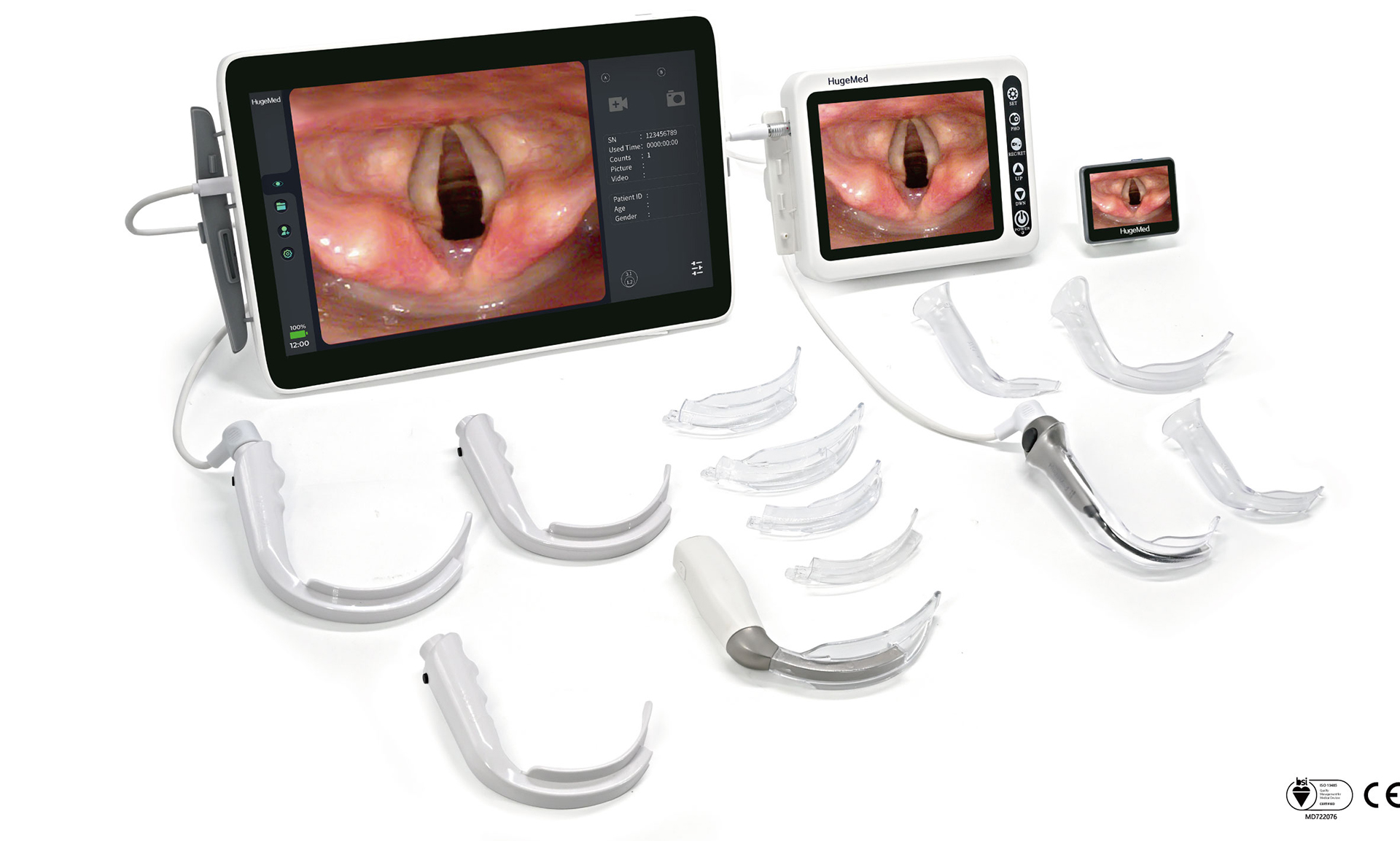
The videolaryngoscope generally consists of:
-
a blade with a built-in camera
-
a lighting system
-
a screen or monitor
-
a video transmission system
This configuration provides a clearer view of the airway structures.
How a videolaryngoscope works
To understand how a videolaryngoscope works, it is important to examine the technology behind the device.
The system uses a miniature camera located at the tip of the instrument. This camera captures images of the larynx and transmits them to a screen in real time.
The physician can view these images while inserting the endotracheal tube into the patient's trachea.
This approach offers several advantages over traditional laryngoscopy:
-
better visualization of the glottis
-
less need to manipulate the patient's head
-
higher success rate in difficult intubations
The ability to view the laryngeal structures on a screen also allows other members of the medical team to observe the procedure.
Clinical applications of the videolaryngoscope
The videolaryngoscope is used in multiple clinical contexts related to airway management.
Common applications include:
-
intubation in surgery
-
airway management in emergencies
-
procedures in intensive care units
-
anesthesiology training
In situations where intubation may be difficult, the videolaryngoscope provides a tool that improves the safety of the procedure.
For this reason, many hospitals have incorporated this device into their standard airway management equipment.
Videolaryngoscope in difficult intubations
One of the scenarios where the videolaryngoscope has the greatest impact is in the management of difficult intubations.
Patients with complex anatomy, facial trauma, or limited cervical mobility can present a challenge for traditional intubation.
In these cases, the improved visualization offered by the videolaryngoscope camera makes it easier to identify the glottis.
This reduces the number of attempts needed to perform the intubation and can improve patient safety.
In many hospital airway management protocols, the videolaryngoscope is recommended as a first-line tool in complex cases.
Technology used in modern videolaryngoscopes
Videolaryngoscope systems have evolved significantly in recent years.
The latest models include:
-
high-definition cameras
-
built-in screens
-
LED lighting
-
portable systems
These improvements have enabled the development of more compact devices that are easier to use in different clinical settings.
In hospitals and medical centers, specialized providers such as GSMED Imaging participate in the implementation of advanced medical technology, including devices used in airway management.
Common mistakes when evaluating videolaryngoscopes
From a hospital perspective, the selection of a videolaryngoscope should consider several technical factors.
One of the most common mistakes is evaluating only the price of the device without considering aspects such as:
-
image quality
-
device ergonomics
-
availability of disposable blades
-
ease of cleaning and maintenance
The correct selection of the device can directly influence the efficiency and safety of procedures.
Total cost of ownership of a videolaryngoscope
When hospitals or clinics evaluate incorporating videolaryngoscopes, it is important to consider the total cost of ownership of the equipment.
This analysis includes factors such as:
-
initial investment
-
consumables or disposable blades
-
system maintenance
-
staff training
Evaluating these aspects allows for more informed decisions about the implementation of medical technology.
A common situation in emergency departments
In many emergency departments, physicians must deal with situations where airway management must be performed quickly.
In these contexts, the availability of a videolaryngoscope can make a significant difference.
The improved visualization offered by the camera allows intubations to be performed in a more controlled manner, especially in patients with difficult anatomy.
This type of technology has become an important ally in improving patient safety during critical procedures.


